Frames Built to Handle Hauling Loads
Trailer Frame Repair and Reinforcement in Cape Coral for visible cracking, separated welds, and bent structural components requiring professional evaluation
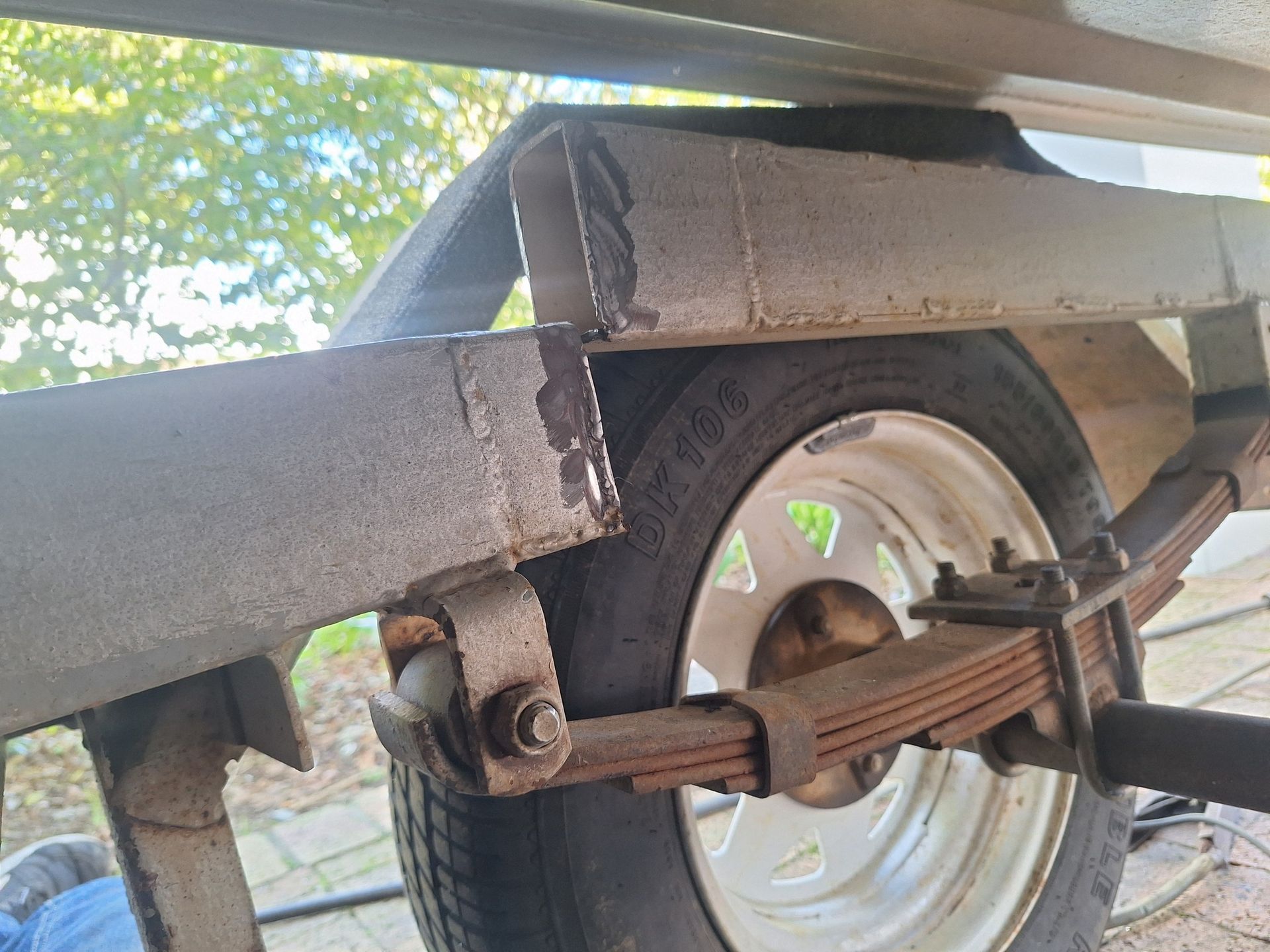
Cracks that form along trailer frame rails, crossmembers that separate at welded joints, or tongue assemblies that bend under load create structural failures that compromise the trailer's ability to carry weight safely. These visible signs indicate that the frame has been stressed beyond its original capacity or that prior welds have failed due to fatigue, corrosion, or inadequate penetration. Black Hat Coastal Welds LLC performs trailer frame repair and reinforcement for utility trailers, boat trailers, commercial hauling trailers, and equipment trailers used throughout Cape Coral and Southwest Florida, addressing damage that affects how the frame distributes load and connects to the axle assembly.
Trailer frame repair involves evaluating the damaged area to determine whether the component can be welded back into service or whether the extent of corrosion, metal loss, or deformation requires section replacement. Reinforcement adds welded supports to areas that experience repeated stress, such as tongue mounts, coupler mounting points, and crossmember connections where load transfer concentrates forces.
Request an on-site inspection to evaluate cracking, bending, or weld separation before continuing to use a damaged trailer frame.
What Proper Frame Repair Requires
Repairing a trailer frame begins with cleaning the damaged area to expose bare metal, removing rust, paint, and any compromised material that would weaken the weld joint. The welder evaluates whether the crack extends beyond the visible surface, whether the surrounding metal has thinned from corrosion, and whether the frame geometry has shifted in a way that affects tongue alignment or axle positioning.
Once the repair is completed, the frame regains structural continuity at the failed joint, the welded area redistributes load as originally intended, and the trailer returns to service without the risk of progressive cracking that worsens with each use. Black Hat Coastal Welds LLC approaches frame repair with attention to how Southwest Florida's combination of salt exposure, humidity, and heavy seasonal use accelerates metal fatigue in trailers used near coastal areas.
Not every damaged frame is repairable—extensive rust perforation, severe bending that has work-hardened the metal, or cracks that have propagated through multiple structural members may indicate that continued repair is uneconomical compared to frame replacement. The inspection determines whether welding restores adequate strength or whether the damage has progressed too far for safe repair.

Answers to Frequent Service Questions
Trailer owners working with damaged frames need to understand what types of damage respond to welding and what conditions require more extensive work or replacement. These questions address common concerns about structural repair.
What types of trailer frame damage can be addressed through welding?
Cracked frame rails, separated crossmember welds, bent tongue assemblies, damaged coupler mounting areas, and localized corrosion damage that hasn't compromised the full cross-section of the member can typically be repaired through welding and reinforcement. The evaluation focuses on how much sound metal remains and whether the repair will restore load-carrying capacity.
How does exposure to Southwest Florida conditions affect trailer frame longevity?
Trailers used near saltwater, exposed to tidal flooding, or stored outdoors without protective coatings experience accelerated rust formation at welded joints where moisture becomes trapped between overlapping metal surfaces. Regular washing and inspection help identify early cracking before the damage progresses to frame failure during use.
Why do trailer frames crack at crossmembers and tongue connections?
These areas concentrate stress where vertical load from the trailer bed transfers into the longitudinal frame rails and where tongue load transfers pulling force into the main frame structure. Repeated loading cycles fatigue the metal over time, and any existing weld defects or corrosion pits become initiation points for cracks that grow with continued use.
What happens after a trailer frame repair is completed?
The repaired frame should be inspected visually for any additional cracks that may have formed during the failure, and the trailer should be loaded gradually during initial use to confirm that the repair is holding under normal operating conditions. Repainting the repaired area protects the bare metal from renewed corrosion in Cape Coral's humid coastal climate.
When should a trailer frame be replaced rather than repaired?
Frames with extensive rust perforation across multiple sections, frames that have been previously repaired multiple times in overlapping areas, or frames with severe twisting or bending that has altered the axle alignment beyond adjustment typically reach a point where continued repair introduces more risk than replacing the frame assembly or the entire trailer.
Black Hat Coastal Welds LLC evaluates trailer frame damage throughout Cape Coral and surrounding Southwest Florida areas, providing repair and reinforcement services for utility, boat, commercial, and equipment trailers. Call (941) 237-0517 to describe the visible damage, trailer type, and current use so the frame condition can be assessed before you continue hauling with a compromised structure.